
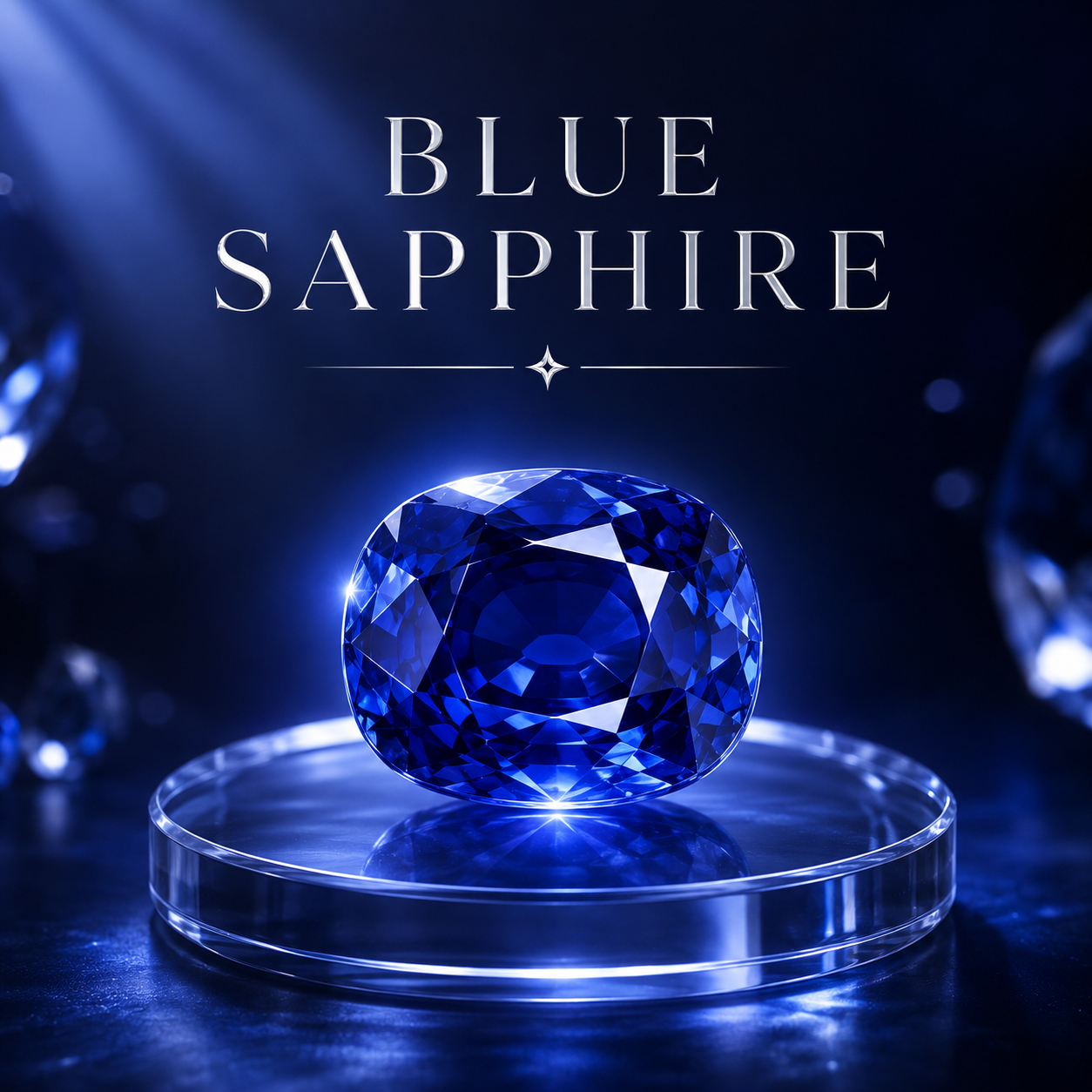
Blue Sapphire
Blue sapphire is a precious natural gemstone admired for its deep blue colour, brilliance, durability, and timeless elegance. A blue variety of the mineral corundum, it is ideal for rings, earrings, pendants, bespoke jewellery, gifts, and gemstone collections. Natural blue sapphires from Sri Lanka are commonly known as Ceylon sapphires and are especially appreciated for their attractive colour and brightness.
Updated 2026-08-06
Natural Blue Sapphire Gemstones
Blue sapphire is one of the world’s most recognised and desirable coloured gemstones. Known for its rich blue colour, excellent hardness, and lasting beauty, it has been used in fine jewellery for centuries.
The term blue sapphire refers specifically to blue gem-quality corundum. Corundum in red is classified as ruby, while corundum in other colours is generally described as fancy sapphire. Sapphire is also the traditional birthstone for September.
Blue Sapphire Properties
Property | Details |
|---|---|
Mineral family | Corundum |
Chemical formula | Al₂O₃, aluminium oxide |
Colour | Light blue to deep violetish blue |
Mohs hardness | 9 |
Specific gravity | Approximately 4.00 |
Refractive index | Approximately 1.762 to 1.770 |
Crystal system | Trigonal |
Lustre | Vitreous |
Transparency | Transparent to opaque |
Common treatments | Heat treatment and, less commonly, lattice diffusion |
Sapphire ranks 9 on the Mohs hardness scale, making it one of the hardest natural gemstones after diamond. Corundum also has excellent toughness and no cleavage, which makes blue sapphire suitable for jewellery worn regularly.
What Gives Blue Sapphire Its Colour?
Pure corundum is colourless. Blue sapphire develops its colour through small amounts of trace elements within its crystal structure, particularly iron and titanium.
The combination and concentration of these elements can produce a wide range of blue shades, including:
Pale sky blue
Cornflower blue
Medium royal blue
Violetish blue
Deep navy blue
Greenish blue
Natural colour zoning may also occur, meaning that the blue colour can appear stronger in some areas of the gemstone than in others. The skill of the cutter is important because the stone must be correctly oriented to display its best colour and brightness. Iron and titanium are associated with the blue colour of sapphire.
Ceylon Blue Sapphire
Sri Lanka is one of the world’s historically important sources of natural blue sapphire. Gemstones originating from Sri Lanka are commonly marketed as Ceylon sapphires, using the country’s former name.
Ceylon blue sapphires are often admired for their bright appearance, transparency, and attractive medium-blue to violetish-blue colours. However, sapphires from Sri Lanka can vary widely in tone, saturation, clarity, treatment, and overall quality.
The geographic origin of a sapphire cannot be confirmed reliably through appearance alone. For higher-value gemstones, an independent gemological laboratory may provide an origin opinion when sufficient evidence is available. Sri Lanka is recognised as a producer of top-quality sapphire, but determining the exact geographic origin can require advanced laboratory analysis.
Blue Sapphire Colour Quality
Colour is generally the most important quality factor when evaluating a blue sapphire.
A desirable blue sapphire usually has:
Strong or vivid colour saturation
Medium to medium-dark tone
Good brightness
Even colour distribution
Minimal grey or overly dark areas
Velvety blue to violetish-blue sapphires with strong saturation are often highly valued. A sapphire that is too dark may appear black under certain lighting, while a stone with weak saturation may look grey or washed out.
Terms such as royal blue and cornflower blue are commonly used in the gemstone trade. However, these descriptions may be interpreted differently by sellers and laboratories. Buyers should examine the actual gemstone, photographs, videos, treatment information, and laboratory report rather than relying only on a colour name.
Blue Sapphire Clarity
Most natural blue sapphires contain inclusions. These are internal features created during the gemstone’s natural formation.
Common clarity characteristics may include:
Fine rutile needles known as silk
Mineral crystals
Fingerprint-like healed fractures
Growth lines
Colour zoning
Small cavities or surface-reaching fractures
Minor inclusions do not automatically make a sapphire low quality. Some fine inclusions can contribute to a soft, velvety appearance. However, large fractures, heavy cloudiness, or inclusions that reach the surface may reduce durability, transparency, or value.
Natural blue sapphires with extremely high clarity are uncommon. Clarity should therefore be considered together with colour, cut, treatment, and overall appearance.
Blue Sapphire Cut and Shape
A well-cut blue sapphire reflects light evenly and displays its colour attractively. Because sapphire rough may contain colour zoning and different tones when viewed from different directions, cutters often balance beauty with weight retention.
Popular blue sapphire shapes include:
Oval
Cushion
Round
Pear
Emerald
Radiant
Princess
Marquise
Cabochon
Oval and cushion cuts are especially popular because they can preserve gemstone weight while producing an elegant appearance.
A poorly cut sapphire may show a pale central area known as a window, excessive darkness, uneven colour, or weak brilliance. Cut quality can significantly affect the gemstone’s overall beauty and marketability.
Natural, Heated and Treated Blue Sapphire
Many natural blue sapphires are heat-treated to improve their colour, clarity, or overall appearance. Heat treatment is widely accepted within the gemstone industry, provided that it is disclosed accurately.
Unheated Blue Sapphire
An unheated sapphire shows no detectable evidence of heat treatment. Fine-quality unheated blue sapphires may receive a value premium because they are rarer.
Heat-Treated Blue Sapphire
Heat treatment can improve colour, reduce the visibility of certain inclusions, and enhance transparency. A heat-treated sapphire remains a natural gemstone.
Lattice-Diffusion-Treated Sapphire
Lattice diffusion uses heat and added chemical elements to alter or introduce colour. Diffusion-treated sapphires generally have a lower market value than comparable unheated or traditionally heat-treated stones.
A reputable laboratory report can help determine whether a sapphire is natural or laboratory-grown and identify detectable treatments.
Natural Blue Sapphire vs Synthetic Sapphire
Natural blue sapphire forms within the earth through geological processes. Synthetic sapphire is created in a laboratory but may have essentially the same chemical composition and many similar physical properties.
Synthetic sapphire is not the same as an imitation. An imitation may be glass or another material designed to resemble sapphire.
Because natural, synthetic, and treated sapphires can sometimes look similar, laboratory testing is recommended for valuable purchases.
How to Choose a Blue Sapphire
When selecting a blue sapphire, review the following characteristics:
Colour
Choose a blue tone that appears attractive under different lighting conditions. Colour should be strong without becoming excessively dark.
Clarity
Look for a stone with good transparency and no serious fractures that may affect durability.
Cut
The gemstone should reflect light evenly, display good symmetry, and avoid a large window or overly dark centre.
Carat Weight
Carat measures gemstone weight, not visible size. Two sapphires of equal weight can appear different in size depending on their shape and cutting depth.
Treatment
Confirm whether the sapphire is unheated, heat-treated, diffusion-treated, fracture-filled, or otherwise enhanced.
Origin
Do not rely only on a seller’s visual opinion. Request an independent origin report for valuable sapphires when origin materially affects the price.
Certification
A recognised gemological report can provide information about gemstone identity, dimensions, weight, treatment, and possible geographic origin.
Blue Sapphire Jewellery
The hardness and toughness of blue sapphire make it suitable for many jewellery designs, including:
Blue sapphire engagement rings
Wedding and anniversary rings
Earrings
Pendants
Necklaces
Bracelets
Men’s rings
Bespoke jewellery
Blue sapphire pairs well with white gold, yellow gold, rose gold, platinum, and silver. It is also commonly combined with diamonds to create contrast and additional brilliance.
How to Care for Blue Sapphire
Warm water, mild soap, and a soft brush are generally safe for cleaning untreated and heat-treated blue sapphires.
Recommended care:
Soak the jewellery briefly in lukewarm soapy water.
Clean gently using a soft brush.
Rinse thoroughly.
Dry with a clean, soft cloth.
Store separately from other jewellery.
Avoid strong impacts, harsh chemicals, and sudden temperature changes. Fracture-filled, cavity-filled, or dyed sapphires require additional care and should generally be cleaned only with a damp cloth.
Buy Natural Blue Sapphire Gemstones
Explore natural blue sapphire gemstones selected for their colour, brilliance, cut, and overall appearance. Product listings should clearly state available details such as:
Carat weight
Measurements
Shape and cut
Colour
Clarity
Treatment
Geographic origin, when verified
Laboratory certification
Price
Whether you are selecting a Ceylon blue sapphire for jewellery, gifting, or a gemstone collection, carefully review the individual stone’s colour, treatment status, measurements, and certification before purchasing.
More from Sapphire
Explore related subfamilies.
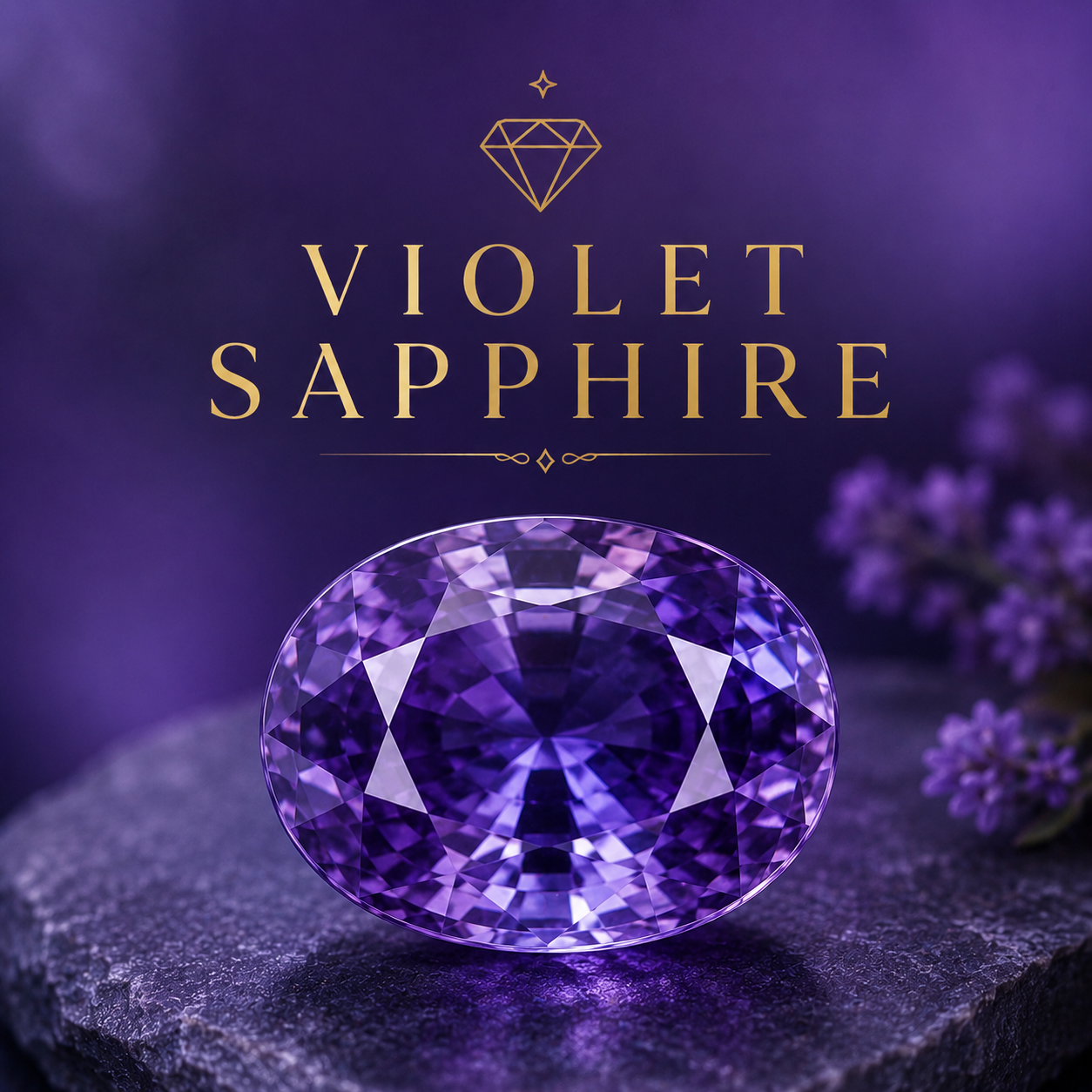
Violet Sapphire
Natural violet sapphire is a distinctive variety of corundum admired for its elegant violet, lavender, and purple-violet tones. With excellent brilliance and a hardness of 9 on the Mohs scale, violet sapphire is suitable for rings, pendants, earrings, bespoke jewellery, and gemstone collections. Each stone has its own colour depth, clarity, cut, and natural character.